


The University of Melbourne
- Phone:+1 (859) 254-6589
- Email:info@example.com
Indian Statistical Institute, kolkata
Prof. Utpal Garain

- Phone:+1 (859) 254-6589
- Email:info@example.com
Professor, Peking University, China
Prof. Ying Tan
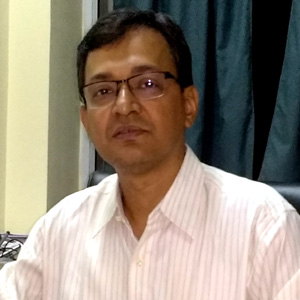
- Phone:+1 (859) 254-6589
- Email:info@example.com
Professor, Dept. of CSE, IIT Kharagpur.
Prof. Soumya K Ghosh

The University of Melbourne
- Phone:+1 (859) 254-6589
- Email:info@example.com
Emeritus Professor, ISM, Dhanbad.
Prof. P. K. JANA

The University of Melbourne
- Phone:+1 (859) 254-6589
- Email:info@example.com
The University of Melbourne
Prof.Rajkumar Buyya
Theme of Talk
Prof. Utpal Garain
From Pixels to Intelligence: Frontier of Machine Learning for Geospatial Analytics
Geospatial analytics is evolving from conventional pattern recognition and prediction toward intelligent systems capable of understanding complex spatial, temporal, and multimodal information. This keynote explores this transition through the convergence of machine learning, foundation models, multimodal AI, and causal reasoning. I will discuss how geospatial intelligence can move beyond pixels and predictions toward contextual understanding, robust reasoning, and trustworthy decision support. Finally, I will introduce the vision of Cognitive Collaboration, where AI systems work alongside domain experts to perceive, reason, explain, and support decisions, transforming geospatial machine learning from predictive tools into collaborative intelligence.
Prof. Ying Tan
Latest Progress of Fireworks Algorithm (FWA) & its Applications
Title of keynote Inspired from the collective behaviors of many swarm-based creatures in nature or social phenomena, swarm intelligence (SI) has been received attention and studied extensively, gradually becomes a class of efficiently intelligent optimization methods. Inspired by fireworks’ explosion in air, the so-called fireworks algorithm (FWA) was proposed in 2010. Since then, many improvements and beyond were proposed to increase the efficiency of FWA dramatically, furthermore, a variety of successful applications were reported to enrich the studies of FWA considerably. In this talk, the novel swarm intelligence algorithm, i.e., fireworks algorithm, is briefly introduced and reviewed, then several effective improved algorithms are highlighted, individually. In addition, the multi-objective fireworks algorithm and the graphic processing unit (GPU) based FWA are also briefly presented, particularly the GPU-based FWA is able to speed up the optimization process extremely. Extensive experiments on benchmark functions demonstrate that the improved algorithms significantly increase the accuracy of found solutions, yet decrease the running time sharply. Finally, several typical applications of FWA, in particular, for big-data application, are presented in detail.
Prof. Soumya K Ghosh
Following the Glow: Analyzing Economic and Urban Dynamics using Nighttime Lights (NTL) Remote Sensing Data
Nighttime Lights (NTL) data, captured by satellite sensors (such as VIIRS and DMSP-OLS), measures artificial illumination on the Earth’s surface at night. Since brighter regions generally correspond to higher levels of urbanization, electrification, infrastructure, and commercial activity, changes in nighttime light intensity can be used to estimate economic growth, monitor urban expansion, identify poverty-stricken regions, and assess the impact of natural disasters or conflicts. By integrating Geographic Information Systems (GIS) with nightlight imagery, researchers can perform spatial and temporal analysis of economic development. GIS enables the processing, visualization, and analysis of satellite data alongside other geospatial layers such as population, transportation networks, and land use. Machine learning and deep learning techniques can further combine these datasets to predict regional GDP, classify urban and rural regions, detect infrastructure development, and monitor socioeconomic changes over time. This approach has become an important area of GeoAI, where satellite imagery, geospatial analytics, and artificial intelligence are combined to provide scalable, real-time insights into economic activity. Applications range from policy planning and smart city development to disaster response and sustainable development monitoring. This talk introduces the fundamentals of Nighttime Light (NTL) data, discusses its unique characteristics, and explores its applications across various domains, including urbanization, economic activity, population estimation, disaster assessment, and environmental monitoring.
Prof. Prasanta K. Jana
Distributed Machine Learning for Internet of Things: An Overview and Research Trends
Internet of Things (IoT) has become an emerging technology with their services across diverse application areas such as autonomous vehicles, smart healthcare, smart industries, defense, and precision agriculture. The rapid growth of IoT has, in turn, increased the demand for machine learning to enable intelligent and data-driven decision-making. However, the explosive generation of data across geographically distributed IoT devices has created a strong need for efficient and scalable distributed machine learning (DML) approaches. In this talk, the fundamentals of distributed learning (DL) will first be introduced, along with its key benefits and challenges. Next, various distributed learning techniques, including Federated Learning (FL), Multi-Agent Reinforcement Learning (MARL), Split Learning (SL), and Distributed Inference, will be discussed, with particular emphasis on Federated Learning and its merits and limitations. The talk will then explore important research challenges in distributed learning followed by key challenges and its future research opportunities.
Prof. Rajkumar Buyya
Neoteric Frontiers in Cloud and Quantum Computing
The twenty-first-century digital infrastructure and applications are driven by Cloud computing, Internet of Things (IoT), Artificial Intelligence (AI), and Quantum computing paradigms. The Cloud computing paradigm has been Transforming computing into the 5th utility wherein “computing utilities” are Commoditized and delivered to consumers like traditional utilities such as water, Electricity, gas, and telephony. It offers infrastructure, platform, and software as services, hich are made available to consumers as subscription-oriented services on a pay-as-you-go basis over the Internet. Its use is growing exponentially with the continued development of new classes of applications such as AI-powered models (e.g., ChatGPT) and the mining of crypto currencies such as Bitcoins. To make Clouds pervasive, Cloud application platforms need to offer (1) APIs and tools for rapid creation of scalable and elastic applications and (2) a runtime system for deployment of applications on geographically distributed Data Centre infrastructures (with Quantum computing nodes) in a seamless manner.
Conference Schedule : https://icci.bitmesra.ac.in/wp-content/uploads/2026/09/Conference_schedule.pdf